


Aesop's Fables: Animal Stories that Teach
Evolution is not a new concept. There may be hundreds of debates over it ever being a reality but we cannot ignore the progression and advancement that generations have witnessed. However, the whole notion of the most developed creatures, that is, humans being the smartest of the lot is not entirely true. Even the fact that we have “evolved” genetically almost never implies that the brain of a creature, much lower in hierarchy of evolution, cannot teach us unwonted and atypical, yet ever so imperative and significant factoids of life.
By bookish definition, we all know morals to be the values that add meaning to our lives and make us more humane. As fragrance is to flowers, morals are to human beings. Many of them are imparted to us, while others often need to be stated out loud! That’s where the fluorescent folktales kick in.
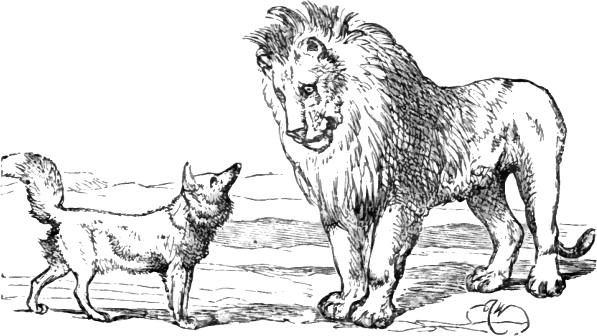
Popular tales like – The Wolf and the Crane, The Lion and the Mouse, Belling the Cat and even The Plane Tree; did not just make our bed time more fascinating and dreamy, they ended up inculcating those ethics and principles that many fail to teach otherwise. However, there is no shortage of people who consider them pointless and mock the representation and idealism behind these animal stories. Character may be animals, but values are those that only pure human conscience can comprehend.
The people who end up criticising the very symbolism of the tales, always end up failing when it comes to dealing well with realism.
We hear, we enjoy and we sleep. With values subtly placed in such stories, one might question the implications, good or bad, if any occurs. It is stupid to question the authenticity of simple ideals! With the youth possessing a list of values not longer than a centipede, the effect is massive. The fear setting now is based on our reaction. Today many say, “Talking animals? Seriously?”. Tomorrow many will exclaim, “Talking humans? Seriously?”.
Stories are fictional, but the implications are not. We keep forgetting the fact that the situational paradox-isms that exist in the life of characters can never be replicated or foretold in the life of a homo-sapien. They are exemplary. These situations are quintessential to the absorption of those values. Let’s not mock the situations we read and rejoiced over once.


Comments