


A product of man's desire to explore: submarines
The five oceans of the world, the Atlantic, Pacific, Indian, Arctic and Antarctic oceans, cover more than 70% of the world’s surface. Of this, the part which humans have been able to explore, amounts only to five percent. It is only natural that we eventually become curious as to what lies beneath the surface of the crystal blue waters that cover our planet.
The question what lies under the sea has been asked by scholars since the time of Alexander the Great, yet, no one was able to device or even think of a concrete vessel capable of carrying people under the waters and back to the surface until centuries after.
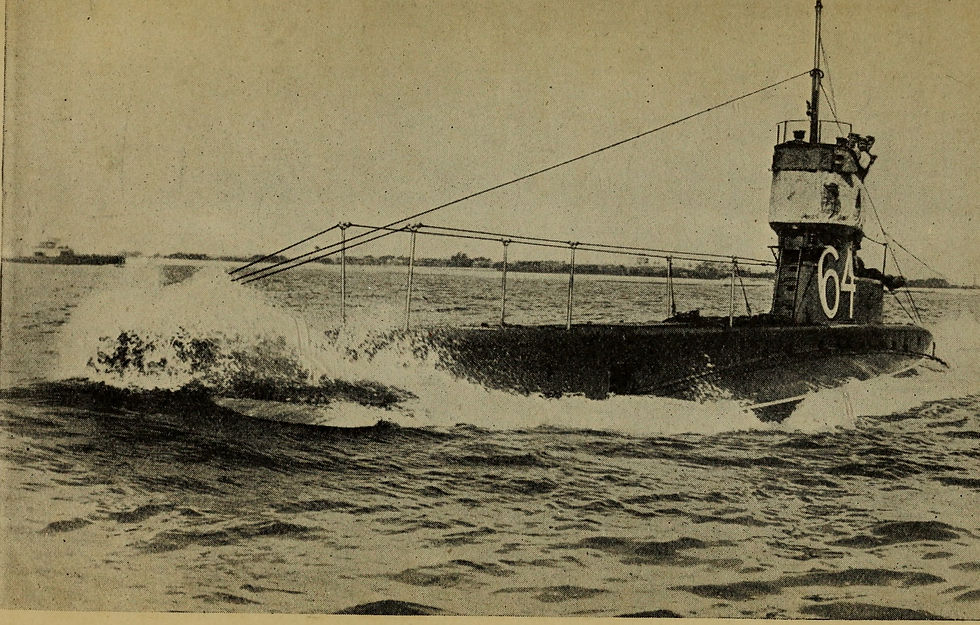
The first ever prototype of a submarine was designed in 1578 by English mathematician William Bourne who designed a closed wooden boat enclosed in waterproof leather. This hardly qualified as a legitimate submarine and the plans were never transferred from paper to reality.
His idea, however, formed the basis for the actual wooden submarine made by another Englishman, Cornelius Drebbel in 1624. This submarine was covered with greased leather and moved rowers pulling on oars. This device was able to go twelve to fifteen feet under water and it said to have carried King James I King James I of England.
If true, it would make him the first monarch to travel underwater.
These early submarines were, however, nothing close to the modern submarines that are used today for both military and exploratory purposes. The basic design of the modern submarine was inspired by the design of Giovanni Borelli, which was designed in 1680 but published in the London’s Gentlemen’s magazine in 1749. This design included a set of goatskin bags in the hull. Water from the sea would have been allowed to enter the bags to submerge the vessel and then it would be forced out using a twisting rod to bring it back to the surface. This is the concept on which the modern ballast tank is based.
David Bushnell designed and created the first ever submarine made for military use. Named, “The Turtle”, this submarine was the first attempt made at creating a submarine capable of destroying warships. The turtle was given to George Washington by Bushnell during the American Revolutionary War. However, it could not sink a British ship when deployed, making it, ultimately, a failed effort.
The efforts of these men culminated in the creation of the modern submarine in 1900 by John Holland. Holland, an Irish immigrant to the U.S wanted to build a submarine to help Ireland in its war against Great Britain.
After many failures, financial turmoil, and constant ridicule by the media and the public in America, his submarine, the Holland VI, a gasoline powered submarine, was successful in going underwater and resurfacing, and was capable of carrying modern torpedoes and a pneumatic dynamite gun. It travelled at a speed of approximately 6 km/h on the surface. Impressed with its performance, the U.S Navy bought the Holland VI in 1901 and renamed it the USS Holland. The USS Holland became the standard for submarines in the army during the First World War.
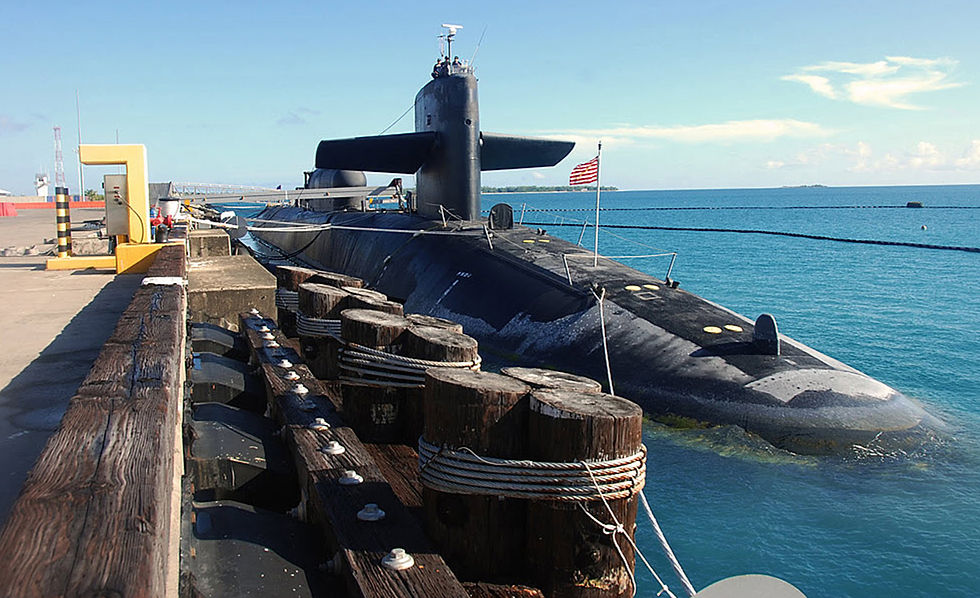
Within a century of its invention, the submarine has been transformed into a very versatile vessel. On one hand, it can be used in war to destroy ships and launch both nuclear and non-nuclear missiles and on the other hand, it is used by scientists, marine biologists, marine archaeologists and many other researchers to explore the depths of the mysterious ocean and contribute to the ever-increasing ocean of knowledge.
The creation of the submarine was due to an innate desire in man to explore what had not been explored. But its application in the two World Wars is a clear indicator of how devastating its use in battle can be.

While weapons are a necessary evil, it would be better if submarines are not tagged one and add to the unnecessary, already vast graveyard of ship carcasses buried on the ocean floor.


Comments