


Eyes up and Wings in the sky: the story of human flight
Humans have wanted to fly ever since the dawn of humanity. Many great literary scholars and thinkers have drawn images in their imaginations of a man soaring through the air like a kite or a hawk. For this very reason, whenever someone thought of a contraption to put man in the skies, it always resembled a bird with wings that could flap and lift people off the ground and into the skies. However, one leap of logic they evaded was that with bird-like wings comes the fact that they could only lift something of a bird-like mass and therefore, most of their attempts were unsuccessful and ended with disastrous results.
The first ever known attempt at flight using a fixed-wing contraption (for lack of a better word) was performed by Abbas Quasim Ibn Firnas in Cordova, Spain in 875 CE. He achieved this using a set of fixed wings and made a free flight. Sadly, no one ever persevered to continue his work and so humanity had to wait another century before any other contribution would be made to aviation history.
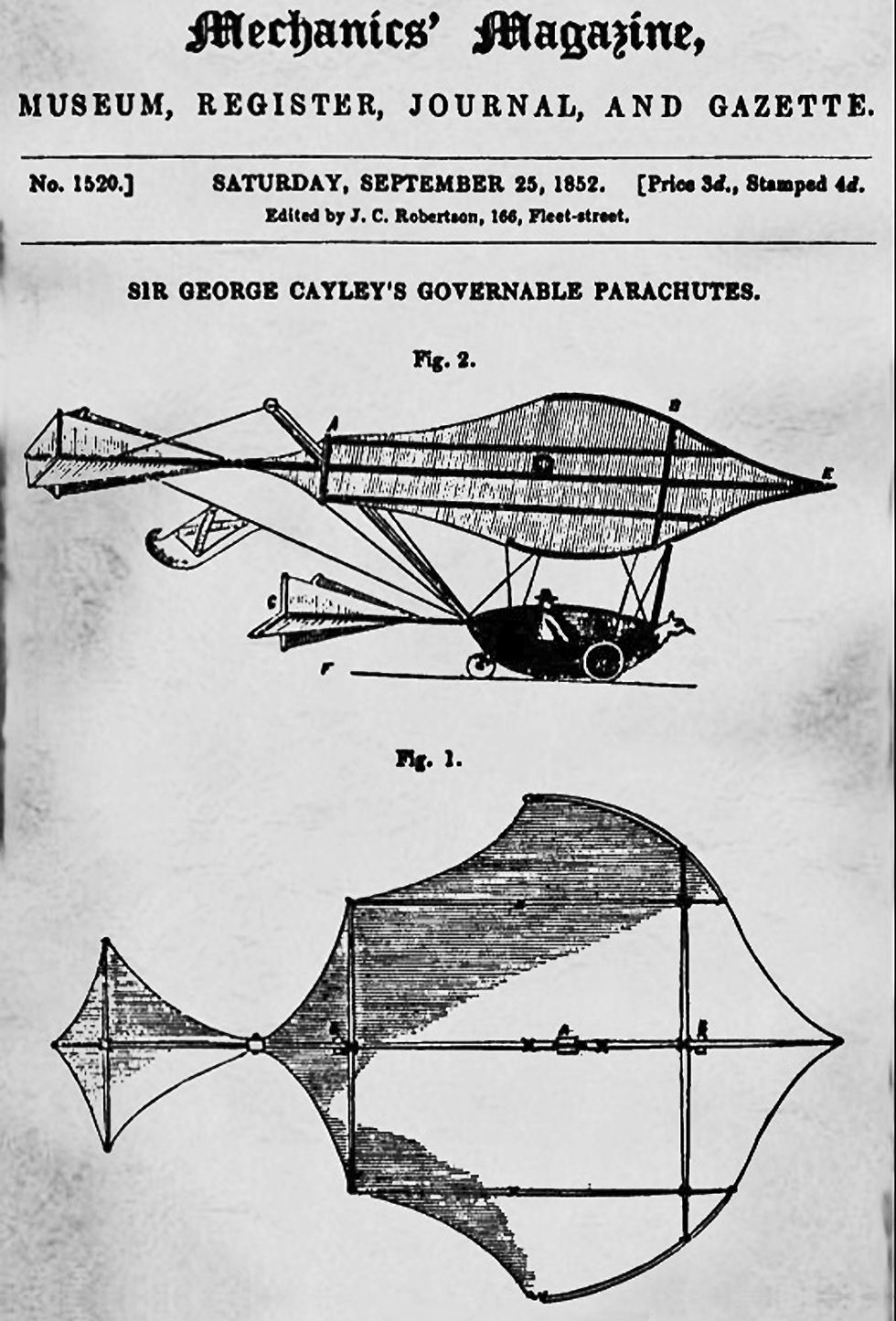
The next contribution to aviation history was made by Sir George Cayley and his experiments with fixed-wing airplanes and gliders. He pioneered research in this field and his successful flights demonstrated to the people that sustained flight was no longer a concept of our imaginations.
The dream of human flight came one step closer to reality in 1857 when Felix Du Temple and his brother Louis France flew a model monoplane driven by a clockwork spring, which is later replaced with a steam engine. They are the first ones to achieve successful flight in a powered aircraft.
And now for the most memorable couple in the history of aviation, the Wright brothers. In 1896, the Wright brothers began to manufacture their own bicycles. The idea of the century came to Wilbur Wright when he observed a buzzard, a type of bird, in flight and noticed that it controlled its balance in flight by twisting its feathers at the tip of its wing. This gave Wilbur the idea of experimenting with gliders. He was joined in his efforts by his younger brother, Orville. After tremendous self-teaching and practice, in 1900, the brothers constructed a glider and, after conducting thorough research, selected Kitty Hawk, North Carolina, USA as the prime spot to test their glider.
The glider under-performed their expectations. They did not let that discourage them and built a new glider with some modifications and tested it the following year. When their second glider underperformed in comparison to the first, Wilbur was so disheartened that he was remarked as saying – “We doubted that we would ever resume our experiments… At this time, I made the prediction that men would sometime fly, but it would not be in our lifetime".
On their sister Katherine’s insistence, the brothers resumed their experiments and found that one of the calculations they relied on for their glider was way off the mark. After conducting experiments on their own in a self-made wind tunnel, the Wrights constructed a third glider in 1902 based on the new calculations. When tested, this glider proved to be better than any other glider in existence. The brothers got their second wind and they planned to create a powered aircraft. After many trials and a great deal of self-teaching, they finally finished the aircraft in 1903 and decided to test it in Kitty Hawk, like all their gliders.
On December 14th, 1903, they tested the plane with Wilbur at the controls. However, they made some miscalculations whilst take-off and the plane climbed an unexpected 15 feet and plowed into the sand. On December 17th, they made their second attempt with Orville at the controls. This was the historic flight which lasted only twelve seconds and covered only 120 feet but was a large leap for humanity in the true sense.
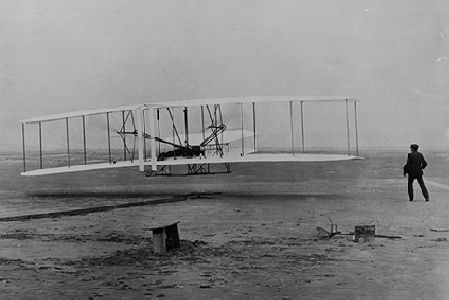
And from there on we were unstoppable when it came to air travel. We created commercial planes, fighter planes, rockets, space shuttles and so much more. This one twelve second flight opened the gateway to a world that had never been explored before. This is the very proof of what human beings are capable of. With our persistence and resilience, we found a way to defy our very status of a terrestrial animal. And it all happened because our minds flew much higher than any bird ever can.


Comments