


Should I be worried about the mercury in the fish I eat?
The time has arrived where in rather than a waiter coming to read out and describe the dishes, a marine biologist or a nutritionist helps us in making the selection for ordering fish. It has become very tough to figure out which fish to eat, mainly due to concerns about the mercury content in fish. Skipping seafood is not an alternative as the probability of missing out on many health benefits is very high. The wiser method is to understand the concerns regarding mercury and making safe food choices.
Found all over the earth in many basic elements and materials, Mercury has been used as medicine, to make amalgams and in many industrial applications for centuries now. However, the dose of it, the route of its intake - ingestion, through skin, or even inhalation; and the duration of exposure to it; make mercury toxic to humans.
While fish has always been recognised to be an excellent source of protein, the risk of mercury contamination has thrown many nutritional benefits into question. But, of course, the nutritional benefits of fish outweigh the mercury poisoning risk. Most of the fish and shellfish contain trace amounts of mercury but some others do contain high levels. Moreover, a very large consumption of fish and shellfish can then result in high levels of mercury in the human body. It is extremely dangerous for a fetus or a young child, it can damage the brain, spine and nerves, that is, the nervous system.
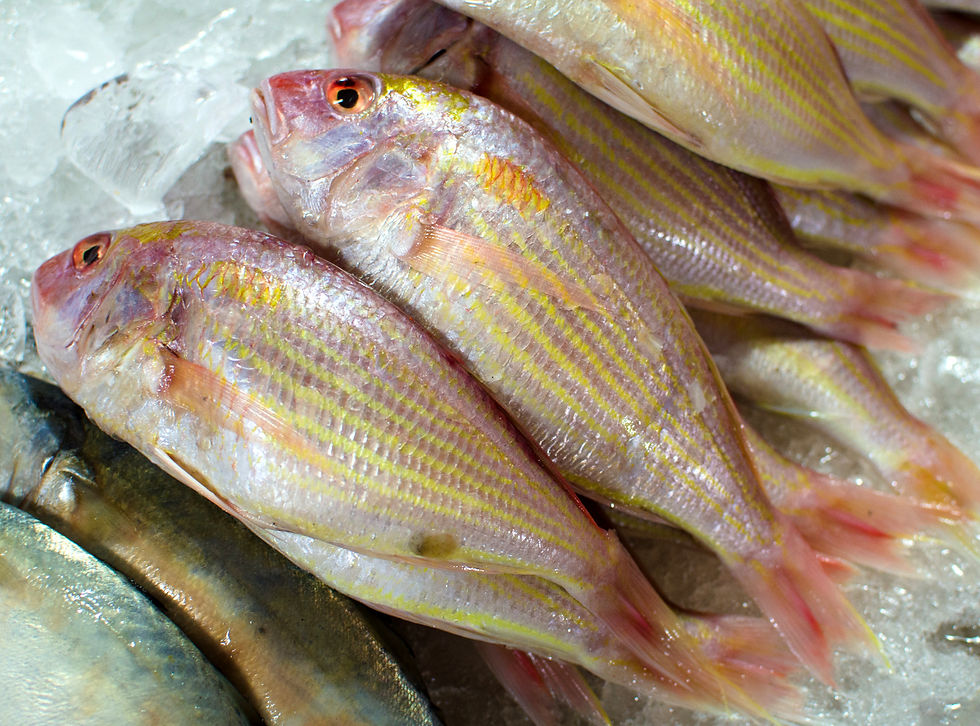
Mercury is present almost everywhere on earth, in soil, air, water. In water, however, it is transformed into methyl mercury. This is very easily absorbed by the fish, some suck up a large quantity of it. Going along the food chain, the smaller fishes are eaten by the larger ones and finally by the humans. Thus, biological magnification occurs at each step. In other words, at each trophic level of this food chain, the quantity of mercury goes on increasing. This mercury would try to leave the human body in the form of urine, faeces and even through breast milk, which is highly poisonous for a new born.
There are blood tests in many others, to determine the amount of mercury and extent of mercury poisoning. Even if we suspect it in our body, we cannot determine the degree of it on our own or until we see legitimate symptoms of the disease. Depression, fatigue, lack of concentration, shakiness, slurred speech, hair loss, memory loss and even numbness in hands and feet are the basic symptoms of mercury poisoning. Others include joint pain, headaches, a lot of disorientation and irritability. Metallic taste in the mouth is a very prominent indicator.
Apart from infants, in adults, it an cause damage to our nervous system, immune system and the heart. But then again, greater risk lies to the lives of the young children. Even a very small amount of mercury in a pregnant or nursing woman’s blood can destroy the developing immune and nervous system of the fetus. During the gestation period, nerve and heat cells divide and proliferate at a very fast rate. They are very sensitive to mercury, hence when they encounter minimal to even excessive amount of it, they stop growing. Nerve cells no longer develop their dendrites and axons to receive and transmit signals. Doctors and scientists are not sure how mercury manages to cause the damage. Children exposed to excessive mercury before birth have altered concentration, memory and issues with language development.

How much of mercury in the blood becomes too much? It is not a confirmed answer. A very healthy person might be able to handle large sums of it while a very unhealthy won’t be able to hold even a trace amount of. Fortunately, most people have a built-in immune system and protection against mercury. Under this, our body expels out the metal within 30 to 40 days. In cases of genetic mutations, the body might not release it out up to 10 days and those are the ones who are at a much higher risk. Studies reveal that children suffer from growth delays when mother’s blood might have as low as 30 to 40 nanograms of mercury per millilitre (ng/mL). On the other hand, adults do not show any symptoms of mercury poisoning until their levels are much higher than 40 ng/mL.
Treatment is simple: stop eating the wrong fish and wait for the mercury levels to drop! Seafood is an excellent source of iron and protein. Its even low in saturated fat, which is good for our health and reduces the risk of heart conditions. However, smart eating is very important, especially by women and children. Women, pregnant or nursing, should consume the low level mercury fish like shark and swordfish; and just consume maximum 12 ounces a week. Young children should just eat smaller portions! But in avoiding high-mercury fish, pregnant and nursing women should not avoid seafood altogether. They will neglect many important nutrients needed for the baby’s growth.
The caution is not to panic before ordering fish or any seafood, it is to order the right fish and within the permissible limit!


Comments