


Diego Rivera: The Mexican Maestro
Diego Rivera was born on December 8, 1886 was a distinguished Mexican painter who is well known for his humongous frescoes that helped in laying down the stepping stone for the mural movement in Mexican art----a movement which was the trigger to the revival of fresco painting and ultimately helped in significantly shaping Mexican Art.
Rivera was also a prodigal child who first started painting the walls of his house at a young age and later on in his life went on to own the walls of universities and public buildings as his canvas for his murals. He insisted and paid more attention to the 'huge scale and public accessibility' of these murals against the elitism of luxurious individuals hoarding a bunch of paintings in a museum or a gallery. He is said to have founded Mexican Mural Movement--a movement which was the trigger to the revival of fresco painting and ultimately helped in significantly shaping Mexican Art.
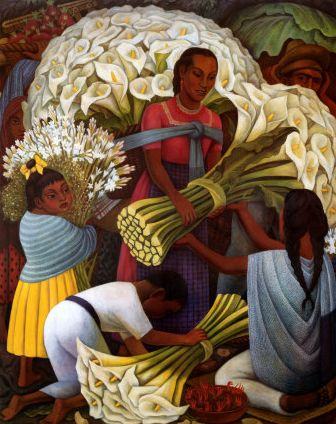
Diego was born in Guanajuato, Mexico to parents who were both academically established and who, surprisingly, instead of chastising him for painting on the walls of his room, installed chalkboards and canvases. They encouraged him to pursue his art and ensured that he got the best possible means to develop, practice and hone his skills.
At the age of twelve, Rivera got admitted at the San Carlos Academy of Fine Arts, where he received training in conventional techniques and aided by government scholarships, he travelled to Europe in 1906 to further continue his education. From there Rivera went on to study art forms that fascinated him and led to him finding his centre.

Rivera remained rooted in his culture and politics throughout his lifetime. All of this showcased in his works which constituted the themes of Mexican culture and history. His work often reflected the lives of the working class and the natives of Mexico and was immersed in the politics that surrounded them.
An outspoken atheist and communist, Rivera’s work were also the limelight of controversy not once but several times. Dreams of a Sunday in the Alameda (his mural), portrayed Ignacio Ramírez holding a sign which stated, "God does not exist" and it was met with much criticism and was not displayed for nine years until Rivera agreed to remove the inscription.
Another one of his work, Man at the Crossroads, was met with a similar rage because it featured a portrait of Vladimir Lenin and was ultimately removed from the display at the Rockefeller Center.

Over the course of his lifetime, Rivera was involved in several relationships and was married four times. The troubles of his personal life find detail in his autobiography and the accounts furnished by his spouses especially by Angelina Beloff and Frida Kahlo.
He died on November 24, 1957 and with his socially and politically expansive artistic thought process, narrative focus, and use of symbolic imagery, Rivera left us a legacy which inspired diverse artists.
Resources:
Featured Images: Potrait of Frida Kahlo and Diego Rivera - Getty Images
Rivera's works - Photos for Class


Comments