


A voyage aboard the history of ships
The earth’s surface is more water than land. The seven major continents are connected only by means of the oceans. And it is saying something when we know that the complete expanse of the ocean has been left unexplored even today. But what lurks in the endless depths of these ghastly waters is far from our concern today. Today we will be talking about using the surface of these waters for travelling across continents.
Before the invention of the airplane in 1903, ships were the only way in which a person could go from, say, Japan to the Americas. Travelling by ship and sea exploration is what led to the creation of the British colonial empire, the discovery of the Americas and the ensuing genocide of Native Americans, trade between the east and west, etc. Many events in history were possible because there was a ship carrying people looking for more opportunities. But how did all of this start? When did all of it start?
The first evidence of travelling on water can be found in ancient Egypt in the 4th millennium BCE. Egypt was a culture supported by the river Nile. Therefore, it is not surprising that they depended on it, not only for agriculture, irrigation and water supply but also for transportation and trade. These Egyptian boasts featured both sails and oars. These became the standard for most early ships. Those made for open seas were often made a little wider since it was difficult to manoeuvre elongated ships on the open seas. The ship’s design was also greatly influenced by its purpose. For example, the warship was more elongated for easy navigation and to carry more fighting men, while the cargo ship was wider to be able to carry more goods. At this time, ships were also used by the ancient Indus Valley and Mesopotamian civilizations for trade.

Boats and ships during this era were made of wood and needed a great amount of manpower to keep them afloat. This remained true until the mid-nineteenth century when the steam boat was invented. The wooden ships used varied greatly in construction compared to the early Egyptian ships. While the Egyptian ships used one square canvas sail, the more modern ships used a combination of sails of different sizes, patterns and positions so as to take maximum advantage of the winds to propel the ships.
The steamboat, invented in the 19th century, was one of the first attempts to use the then new steam engine on a transport vessel. The credit for the invention of the steamboat is widely disputed with the British, French and Americans fighting for the accolade. However, the widely accepted form is that the first ever steam powered vessel was a river steamer built by Robert Fulton in 1808. This was revolutionary as it helped to develop faster, more sustainable ships which required lesser labour to operate. In 1819, the first steamships were successfully able to cross the Atlantic. In 1845, the same technology was used to create large ocean liners.
Vintage Sailors
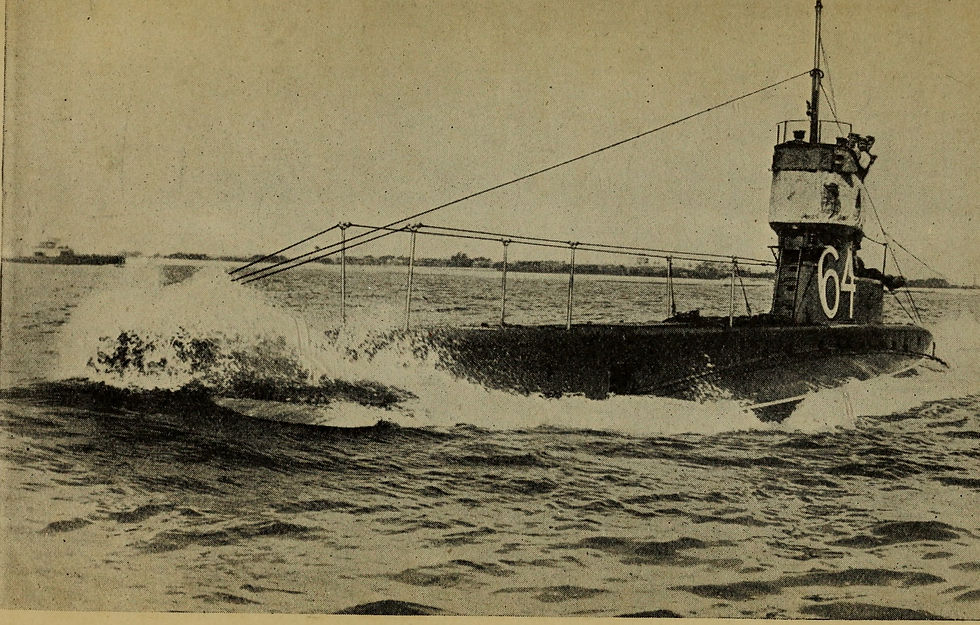
in 1910, the diesel engine was used to power ships. They were more economical compared to the coal burning steamers. This became a staple in all big and small ships and boats and is used even today. In 1959, NS Savannah, one of the first nuclear powered ships was created. It has the capacity of running for three years without needing refueling. And that brings us to the ocean liners we have today. While most of them are used for recreation, they are also used for trade, travel and warfare.
The history of ships and water transportation is a long one. It is a mode of transport which is probably the second oldest as well as the cheapest. Over the years, we have seen many variations on ships which range from the primitive to the highly advanced. Today, ships aren’t even used that often in modern armies and aircraft carriers are preferred. This, however doesn’t discount the fact that without ships, we would not have been able to achieve the sophisticated civilization that we have today

Comments