


Indic Calligraphy
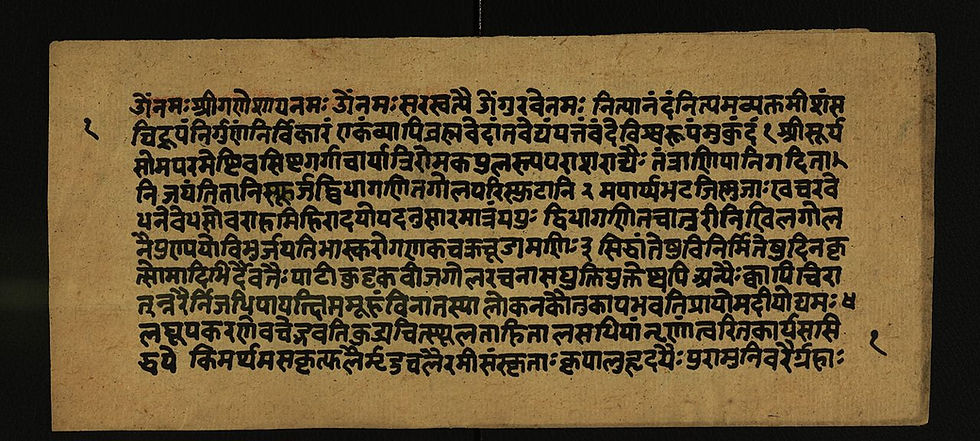
Calligraphy is the art of beautiful handwriting that is not just a treat to the eyes but also a home to a vast talent. The term is derived from the Greek words for “beauty” (kallos) and “to write” (graphein). Calligraphy is seen as 'a composition of art through which words are communicated.' There is a degree of skill that is important for calligraphy which is unconventional but at the same time has a harmony.
“Calligraphy,” entered the mainstream European languages at the end of the 16th century; however, calligraphy did not emerge in English until 1613. Post-1913 to present day, writing is continued to be distinguished between ordinary handwriting and a more decorative calligraphy.
One of the most important examples of calligraphy to progress from Aramaic writing in its deconstruction to reconstruction through South and Central Asia were the scripts of India, especially of Sanskrit. The first traces of Indic writing first appeared in the 3rd century BCE during the reign of Ashoka (c. 265–238 BCE).
The inscriptions were stiff and angular in form, as Ashoka was committed to stones. Ashoka, the leader of a great empire, diverged from military success to embrace and nurture the arts and religion. The steps of Ashoka were followed leading to two new calligraphic types that appeared: Kharoshti and Brahmi. In the 3rd century BCE to the 4th century CE Kharoshti was used in the northwestern regions of India it was used in Central Asia until the 8th century. Kharoshti is characterized by a vigorous pen letter, reflecting the influence of Middle Eastern calligraphy.
Indic inscriptions favoured Copper as a material to inscribe upon. Different parts of India indulged in the usage of different materials for inscriptions. In the north of India, birch bark was used as a writing surface as early as the 2nd century CE.
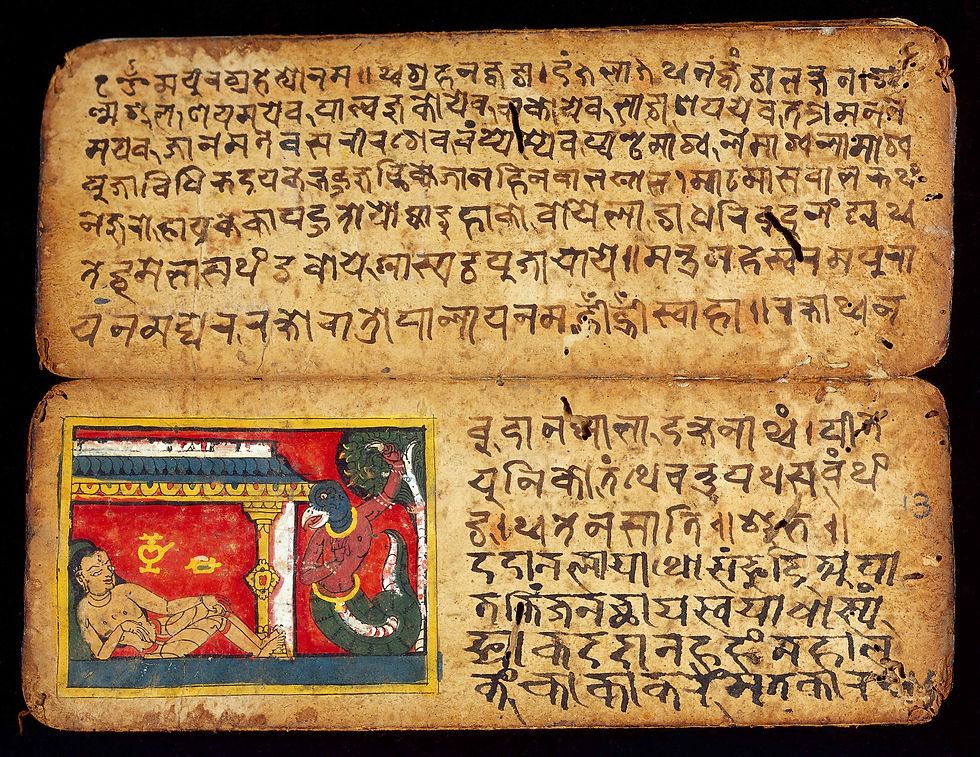
Palm leaves were a common surface for many Indic manuscripts even after the Indian languages were put on paper in the 13th century. These palm leaves were combined and given a form of a book. Long rectangular strips of palm leaves were placed on top of one another, each side was written upon, and there holes were drilled through all the leaves which were brought together through a string of thread. Southeast Asia was a common place to manufacture such books. One of the reasons why palm leaf was so common was that it was an excellent surface for pen writing which made all inscriptions, even the most delicate ones possible.
Visually, Sanskrit is associated most closely with the alphabetic form named Devanagari. A pen-written manuscript of 15th-century in the Freer Gallery at Washington, D.C can be observed with the alphabetic signs that hang down from a strong horizontal top line that may become connected. Through the years that have witnessed the journey of calligraphy, the strong horizontal and vertical emphasis of inscription writing has been preserved in the Devanagari script. The modern typefaces and teaching manuals stress upon this stiffness of execution.
It is in the history that we find our present; it is the past from where we borrow our today. The foundation of Indic calligraphy is laid since many years, however, its grace, beauty and visual charm is unlikely to be forgotten.


Comments